

Overview
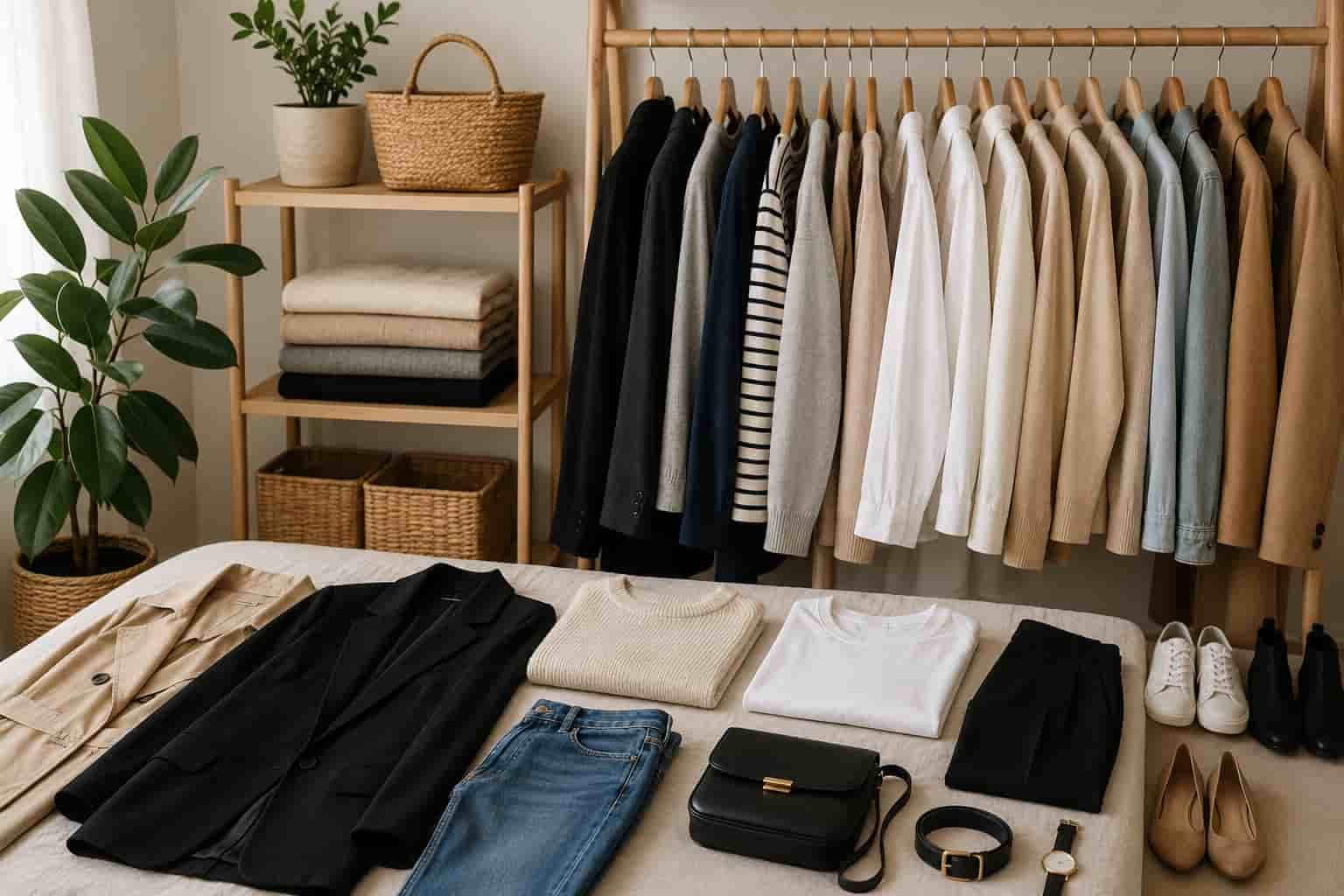
Building a capsule wardrobe for beginners involves curating a small, versatile collection of loved items—typically 30–40 pieces that can be mixed and matched to create multiple outfits. In my experience, the biggest mistake people make is trying to copy Pinterest-perfect wardrobes instead of building one that fits their real life.
Steps to Build Your First Capsule Wardrobe
1. Assess and Purge
Take everything out of your closet and separate items into:
- Keep
- Donate
- Store for another season
Keep only pieces you genuinely enjoy wearing and that fit comfortably right now.
2. Define Your Personal Style and Color Palette
Choose mostly neutral colors like:
- Black
- White
- Navy
- Gray
- Camel
Then add a few accent colors that suit your skin tone and lifestyle.
3. Focus on Wardrobe Essentials
Start with versatile basics like:
- White T-shirts
- Comfortable jeans
- Tailored trousers
- Neutral sweaters
- White sneakers
- Blazers
4. Use the 3-3-3 Rule
A beginner-friendly capsule wardrobe formula includes:
- 3 tops
- 3 bottoms
- 3 shoes
This makes outfit planning much easier.
5. Shop Intentionally
Instead of chasing trends, invest in quality clothing you can wear repeatedly.
6. Follow the 30 Wears Rule
Before buying something new, ask yourself:
“Will I realistically wear this at least 30 times?”
That one question completely changed how I shop.
For beginners, I strongly recommend starting with just one season first before trying to build a year-round capsule wardrobe.
Why I Wanted a Capsule Wardrobe in the First Place
There were periods in my life when getting dressed felt incredibly easy. I either wore work uniforms or repeated the same practical outfits every day without overthinking anything.
But outside of those seasons of life, my wardrobe became overwhelming.
I loved fashion. I saved outfit inspiration on Pinterest, watched styling videos on YouTube, and admired brands like Gucci, Maison Margiela, and vintage Halston. I could recognize beautiful style immediately, but translating that into outfits for my own body and lifestyle felt impossible.
My closet was full, but somehow I still felt like I had nothing to wear.
I’d buy trendy pieces, black basics, random sale items, and clothes that looked amazing online but never worked in real life. Some were uncomfortable. Some didn’t fit properly. Others simply didn’t suit my lifestyle.
That cycle became exhausting.
Eventually, I realized I didn’t need more clothes. I needed a better system.
What Finally Made Capsule Wardrobes “Click” for Me
The biggest turning point was understanding that a capsule wardrobe should support your real lifestyle — not your fantasy lifestyle.
That sounds obvious now, but it completely changed how I approached fashion.
I used to shop for the version of myself who attended stylish dinners, wore structured blazers daily, and somehow looked polished all the time.
In reality?
Most of my days were casual. I needed comfortable outfits that worked for errands, parenting, meetings, travel, grocery runs, and everyday life.
Once I accepted that, building my wardrobe became much easier.
I Started by Auditing My Closet
The first thing I did was pull everything out of my closet.
Honestly, it was overwhelming.
I created three piles:
- Keep
- Donate
- Store
I kept only the clothes that:
- Fit comfortably
- Matched my lifestyle
- Felt good on my body
- Were easy to style
- Didn’t require constant adjusting
I also stopped forcing myself to keep clothes simply because they were expensive or trendy.
That included:
- Tight jeans I hated wearing
- Uncomfortable shoes
- Polyester blends that made me sweaty
- “Someday” outfits I never actually reached for
This step alone made my closet feel lighter.
Understanding My Personal Style Changed Everything
I spent time researching personal style systems like:
- Color analysis
- The Kibbe body type system
- Minimalist fashion styling
I discovered I looked best in soft, muted colors similar to the Soft Summer palette and preferred tailored, clean silhouettes instead of overly trendy pieces.
That helped me narrow down what actually worked for me.
In my experience, understanding your personal style is less about following rules and more about recognizing patterns.
For example, I noticed:
- I preferred natural fibers over synthetic fabrics
- I liked minimal line breaks in outfits
- I wore casual outfits 90% of the time
- Comfort mattered more than trends
Those realizations became the foundation of my capsule wardrobe.
The “Modules” Method Completely Changed My Wardrobe
After months of research, I discovered a capsule wardrobe formula that finally made sense.
Instead of trying to build one massive wardrobe all at once, I started building small outfit modules.
Each module included:
- 2 bottoms
- 3 tops
- 1 outer layer
- 1 pair of shoes
That’s it.
Suddenly, outfit planning became simple.
Instead of asking:
“What should I wear today?”
I already knew everything worked together.
This method also prevented impulse shopping because every new piece had to fit inside an existing module.
My Real-Life Casual Capsule Wardrobe
Most of my lifestyle revolves around casual dressing, so I focused there first.
Some of my most-worn pieces included:
- Neutral joggers
- Flare leggings
- Relaxed jeans
- Organic cotton T-shirts
- Oversized cardigans
- Quilted jackets
- Neutral sneakers
- Adidas Sambas
I repeated combinations constantly, but because everything coordinated, the outfits still felt intentional.
One thing I learned quickly is that repeating outfits is not a failure.
It’s actually the goal.
A practical capsule wardrobe removes decision fatigue and gives you reliable outfits you genuinely enjoy wearing.
Why Comfort Became My Biggest Fashion Rule
One of the most important lessons I learned is that uncomfortable clothing ruins confidence.
For years, I ignored this.
I bought:
- Tight denim
- Stiff blazers
- Synthetic fabrics
- Trendy shoes that hurt my feet
But no matter how stylish something looked, if I felt uncomfortable, I couldn’t enjoy wearing it.
Now, comfort is non-negotiable in my wardrobe.
That doesn’t mean dressing sloppy. It means choosing pieces that:
- Fit properly
- Allow movement
- Feel breathable
- Work with daily life
Ironically, once I prioritized comfort, my outfits actually looked more polished because I felt more confident in them.
How Pinterest and Canva Helped Me Plan Outfits
Pinterest was useful for inspiration, but Canva helped me actually build outfits.
I started creating visual outfit boards using screenshots of clothing I already owned.
This helped me:
- Identify wardrobe gaps
- Avoid duplicate purchases
- See color combinations clearly
- Plan outfits before shopping
It also slowed down impulse buying.
Instead of immediately purchasing something trendy, I’d add it to my digital wardrobe board first. Most of the time, I realized it didn’t actually fit my capsule wardrobe.
That habit saved me a surprising amount of money.
The Biggest Mistakes I Made Building a Capsule Wardrobe
If I could start over, I would avoid a few common mistakes.
1. Buying for My Fantasy Life
I used to shop for occasions that barely existed.
Now I shop for my actual routine.
2. Ignoring Comfort
No matter how stylish an item is, you won’t wear it consistently if it’s uncomfortable.
3. Buying Too Much Black
I assumed black matched everything, but it actually made my wardrobe feel repetitive and harsh.
Adding softer neutrals created more variety.
4. Following Every Trend
Trends fade quickly. Personal style lasts much longer.
5. Building Everything at Once
Trying to create a full-year wardrobe immediately was overwhelming.
Starting with one season worked much better.
My Best Tips for Beginners Starting a Capsule Wardrobe
If you’re just getting started, here’s what I recommend.
Start Small
Build a capsule wardrobe for only one season first.
Focus on Versatile Basics
Choose clothing you can style multiple ways.
Examples include:
- White button-down shirts
- Neutral sweaters
- Straight-leg jeans
- Tailored trousers
- White sneakers
- Simple jackets
Use Mostly Neutral Colors
Neutral shades make mixing and matching easier.
Prioritize Quality Over Quantity
You do not need dozens of outfits.
You need fewer clothes that work harder.
Use the 30 Wears Rule
Before buying something, ask:
“Will I wear this at least 30 times?”
That single question dramatically improved my shopping habits.
Did My Capsule Wardrobe Actually Work?
Surprisingly, yes.
For the first time in years:
- Getting dressed became easier
- Laundry became manageable
- My closet stayed organized
- I stopped panic-shopping
- I felt more comfortable in my body
Most importantly, I stopped feeling overwhelmed every morning.
That alone made the entire process worth it.
My wardrobe is still evolving, and I still enjoy fashion inspiration from places like Pinterest, YouTube, and minimalist fashion creators like Hannah Poston. But now I approach style with much more intention.
Instead of constantly chasing new trends, I focus on building a wardrobe that supports my real life.
And honestly, that has been far more freeing than owning endless clothes.
Final Thoughts
Learning how to make a capsule wardrobe work wasn’t about becoming ultra-minimalist or perfectly fashionable. It was about creating a wardrobe that felt practical, comfortable, and realistic for everyday life.
In my experience, the best capsule wardrobe is not the one that looks perfect online. It’s the one that makes your mornings easier, your closet calmer, and your life less stressful.
Start simple.
Focus on comfort.
Build slowly.
And give yourself permission to create a wardrobe that works for you — not just one that looks good on Pinterest.