

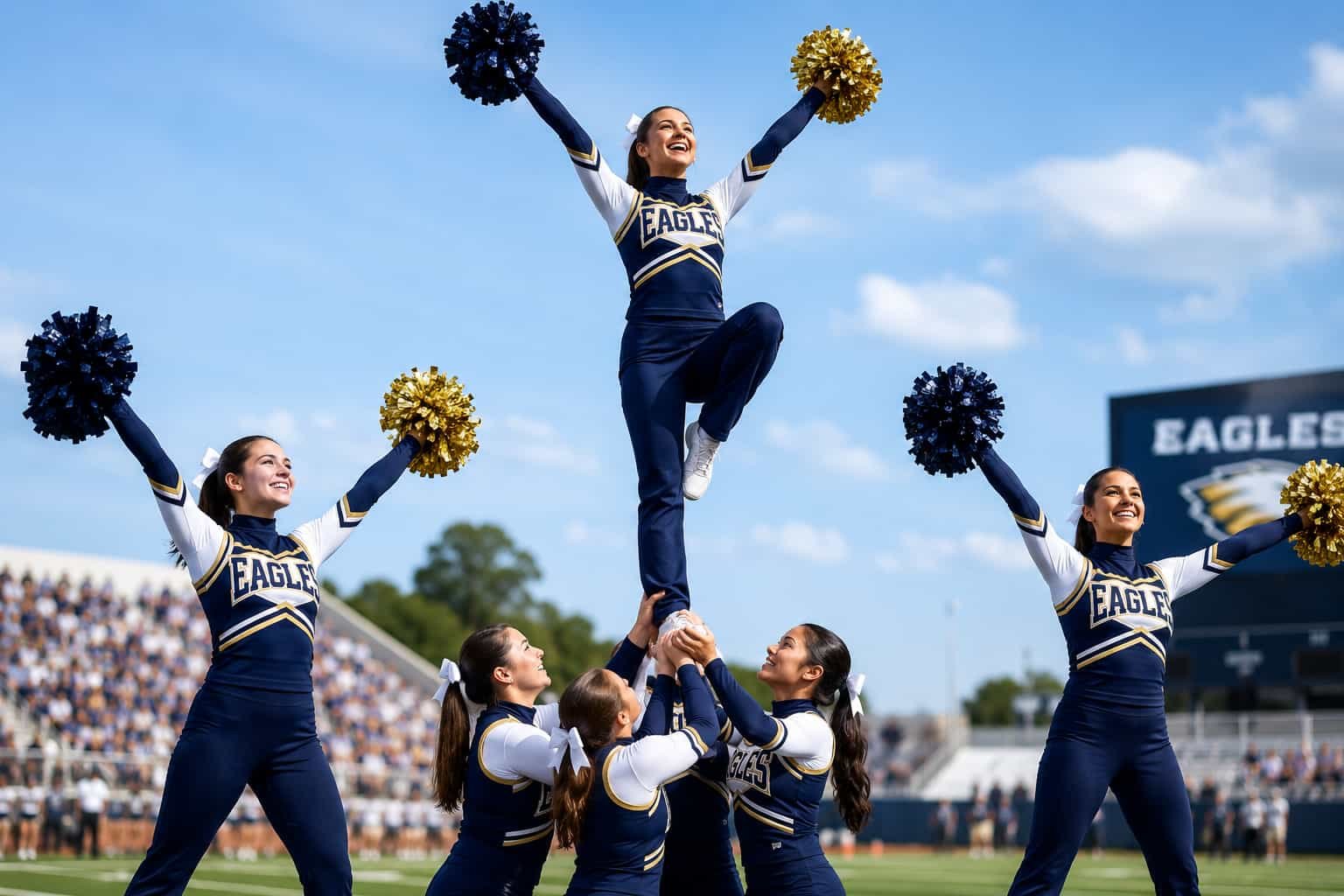
Every cheerleader knows that familiar debate: “Is cheerleading even a sport?” If you’ve ever poured your heart into a routine, felt the burn in your muscles after hours of practice, or nailed a perfect stunt only to hear someone dismiss it as “just cheering,” this guide is for you.
I’ve followed cheerleading closely for years, and in my experience, the athleticism, dedication, and skill involved are undeniable. In this complete guide, we’ll dive into the history, evolution, physical and mental demands, official recognitions, and what truly makes cheerleading a sport. Whether you’re a cheer athlete, coach, parent, or curious fan, you’ll walk away with a deeper appreciation for this dynamic activity.
As cheerleading continues to gain recognition globally, discussions about whether it qualifies as a Popular Sport have become more common among sports fans and athletic organizations.
Overview
Yes, cheerleading is considered a sport, especially in its competitive form (All-Star or STUNT), as it requires immense physical exertion, skill, teamwork, and athletic training. While traditional sideline cheer focuses on spirit, competitive cheer involves high-risk stunts, tumbling, and dance.
Key Points on the Debate:
- Official Recognition: In 2016, the International Olympic Committee (IOC) recognized the International Cheer Union (ICU) as a sport federation, with full recognition following later, making it officially recognized as a sport.
- Competitive Focus: Competitive cheer teams train year-round, competing at regional and national levels.
- STUNT: A version of cheerleading called STUNT was developed to focus entirely on the athletic, technical components of cheer, aimed at meeting Title IX requirements. It has now advanced to NCAA Championship Sport status.
- Physicality & Risk: Cheerleading is highly demanding, with studies indicating notable injury rates in stunts, though overall rates are often lower than many traditional sports.
- Academic/NCAA Status: While many states recognize competitive cheer as a high school sport, traditional sideline cheer has faced hurdles at the NCAA level, though STUNT is changing that.
Overall, modern competitive cheerleading fits the definition of a sport, though some, such as ESPN, have historically debated the distinction between sideline cheering and competition.
What Is Cheerleading?
Cheerleading blends precision, strength, dance, gymnastics, and elite tumbling skills into one seamless performance. It’s commonly performed to support sports teams on the sidelines, but modern cheerleading goes far beyond that. Competitive cheerleading is a high-energy discipline that demands strength, coordination, and top-tier athletic conditioning.
There are two primary forms today:
- Sideline cheer — Focused on energizing crowds and supporting teams.
- Competitive cheer (often All-Star) — Where teams battle head-to-head with complex routines full of stunts, pyramids, tumbling, and dance.
In my experience watching and learning about the sport, the transition from sideline support to center-stage competition has been one of the most exciting developments.
The Origins of Cheerleading
The story begins in 1898 at the University of Minnesota. Johnny Campbell, widely known as the “father of cheerleading,” stood up during a football game and led the crowd in a chant. That moment on November 2, 1898, marked the birth of organized cheerleading.
What started as simple crowd support evolved significantly. By the 1960s, school competitions introduced formal judging based on stunting, skill, and overall performance. This shift helped cheerleading gain recognition as a legitimate athletic activity.
The Evolution: From Sidelines to Center Stage
Cheerleading has come a long way:
- 1960s–1980s: It became more organized with structured competitions.
- 1980s: ESPN broadcasts brought elite routines into homes worldwide, boosting visibility and popularity.
- 2004: The International Cheer Union (ICU) was founded, helping standardize international rules and competition standards.
Today, cheerleading thrives in both competitive arenas and on the sidelines of major sports events. The ICU’s recognition by the IOC has been a game-changer, opening doors for global growth and potential Olympic inclusion.
I was skeptical at first about how much the sport had evolved, but after comparing it with older footage and today’s routines, the increase in difficulty and athleticism is remarkable.
Cheerleading as a Sport: Meeting the Criteria
According to standard definitions, a sport involves physical effort, technique and skill, and rules-based competition. Cheerleading checks every box.
1. Physical Demands Cheerleaders train year-round to build strength, flexibility, endurance, and agility. Tumbling passes and partner stunts require conditioning comparable to gymnastics or even football players. The explosive power needed for lifts and the control for landings is no joke.
2. Strategy and Skill Routines demand precise timing, intricate choreography, and intense teamwork. Teams spend months perfecting every second of a performance—creative transitions, innovative stunts, and synchronized execution make or break a routine.
3. Rules and Judging Competitive cheer follows strict safety guidelines. Certified judges evaluate technique, execution, difficulty, and artistry under formal standards. Safety has improved dramatically over the years thanks to better regulations.
4. Organized Competitions From local events to national and international championships, including the World Cheerleading Championships, athletes compete at the highest levels. The structure mirrors other recognized sports.
The Competitiveness of Cheerleading
Cheerleading is fiercely competitive. Teams are scored on difficulty, execution, timing, creativity, and presentation. The pressure is real— one mistimed lift or wobbly pyramid can cost valuable points.
Events like the World Cheerleading Championships have elevated the sport globally. Cheerleaders now showcase incredibly complex routines that highlight advanced athletic skills. In my view, the mental toughness required to perform under lights with judges watching rivals that of any traditional athlete.
The Case for Cheerleading as a Sport
Here’s why cheerleading earns its place among sports:
- It requires peak physical fitness through constant training.
- It features organized competitions with formal, objective judging.
- It operates under strict safety and performance regulations.
- It demands advanced individual skills, exceptional teamwork, and strategic planning.
Cheerleaders train year-round with strength sessions, tumbling practice, choreography rehearsals, and conditioning work. The bravery involved in high-risk stunts deserves serious respect.
One common question I hear is about injury risk. Studies show cheerleading has high injury rates in stunts (especially concussions and lower extremity issues), though overall rates are often lower than sports like girls’ soccer or basketball when measured properly. Proper coaching, conditioning, and safety protocols are making it safer.
Real-Life Insights and Common Questions
I’ve seen talented athletes who excel in cheer but get overlooked because of outdated perceptions. One friend’s daughter trained rigorously for months for a competition, balancing school and intense physical preparation. The discipline she gained transferred beautifully to other areas of life.
A frequent concern: “Does it count for college scholarships or Title IX?” The development of STUNT—a version focused purely on athletic components—has helped address this, providing more opportunities for female athletes and now gaining NCAA championship status.
Quick Tips for Aspiring Cheer Athletes
- Prioritize consistent strength and flexibility training.
- Focus on technique before adding difficulty.
- Film your practices to catch small form issues.
- Build team trust—stunting safety depends on it.
- Fuel your body properly; recovery is as important as training.
What I loved most about diving deeper into this topic is seeing how far the sport has come from Johnny Campbell’s first cheer to today’s global competitions.
Frequently Asked Questions
Is competitive cheerleading recognized as a sport by the Olympics? The IOC has officially recognized the ICU, paving the way for potential future inclusion. It’s a huge step forward.
Why do some people still debate if cheerleading is a sport? Traditional sideline cheer emphasizes spirit and support, while competitive versions are purely athletic. This distinction fuels the conversation, but modern competitive cheer meets every sport criterion.
How dangerous is cheerleading compared to other sports? It carries risks, particularly with stunts, but proper training and rules have reduced catastrophic injuries significantly. Always train under qualified coaches.
Final Thoughts: Cheerleading Is Undeniably a Sport
Cheerleading demands agility, strength, coordination, bravery, and incredible teamwork. Athletes perform high-risk stunts, intense tumbling, and perfectly timed routines that require elite conditioning.
When someone asks, “Is cheerleading a sport?” my answer is clear: Yes. It is a competitive, physically demanding sport that deserves the same respect as any other athletic discipline.
If you’re a cheerleader reading this, keep pushing your limits—you’re athletes through and through. What are your thoughts on this debate? Have you faced skepticism about cheer being a sport? Share your experiences in the comments below—I’d love to hear your stories and continue the conversation. Let’s celebrate the hard work and passion that make cheerleading incredible.