

There are some places in the world that feel almost untouched by modern tourism. Lake Baikal is one of them.
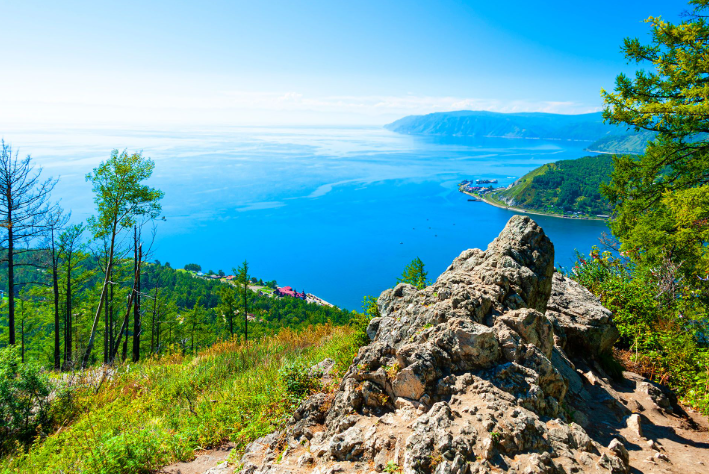
When I first traveled through Siberia, I expected dramatic landscapes and endless forests. What I did not expect was the feeling of complete scale and silence that Lake Baikal creates. Standing on the shoreline for the first time, it honestly felt more like an ocean than a lake.
The water stretched beyond the horizon, the mountains disappeared into the distance, and the surrounding wilderness made civilization feel very far away.
In my experience, Lake Baikal is not just another scenic destination in Russia. It is one of those rare places where nature still dominates everything around it.
Important Tip:
While planning your adventure to Lake Baikal, many backpackers look for ways to Travel Cheap by managing transportation and travel expenses wisely.
Whether you visit in summer for hiking and swimming or in winter for the famous blue ice formations, Baikal offers a travel experience that feels completely different from most tourist hotspots.
Overview
Siberia’s giant lakes are dominated by Lake Baikal, the world’s deepest and oldest freshwater lake, containing over 20% of Earth’s unfrozen fresh water. Spanning 640 km in southeastern Siberia, this tectonic rift is renowned for its crystalline water, endemic species like the freshwater Nerpa seal, and dramatic winter ice formations.
Lake Baikal: The Pearl of Siberia
Lake Baikal is considered one of the world’s greatest natural wonders because of its extraordinary scale and biodiversity.
- Depth: Around 1,642 meters deep
- Age: Approximately 25–30 million years old
- Water clarity: Visibility can reach nearly 40 meters
- Biodiversity: More than 3,700 species of plants and animals
Nearly two-thirds of these species exist nowhere else on Earth, including the famous Baikal seal.
Winter Expeditions and Ice Phenomena
Winter transforms Baikal into an enormous frozen wilderness.
- The famous “Blue Ice” creates transparent frozen surfaces that resemble giant sheets of glass.
- Olkhon Island becomes accessible through ice roads and hovercraft routes.
- Massive ice formations known as “ice hammocks” rise from colliding ice plates.
For adventurous travelers, winter at Baikal feels almost like stepping onto another planet.
Why Lake Baikal Is So Special
People often describe Lake Baikal as the “Pearl of Siberia,” but that description barely captures how enormous and unique it truly is.
The lake contains:
- over 20% of Earth’s unfrozen freshwater
- some of the clearest water on the planet
- rare wildlife found nowhere else
What impressed me most was the purity of the environment. Compared to crowded tourist lakes in Europe or Asia, Baikal still feels remarkably wild and undeveloped.
You can hike for hours without hearing traffic or seeing large crowds.
That isolation is exactly what makes the destination memorable.
Getting to Lake Baikal
Reaching Baikal takes some planning because it sits deep within Siberia.
Most international travelers first arrive in Moscow before taking another flight to Irkutsk, which is considered the main gateway to the lake.
During my trip, the long journey actually became part of the experience.
Flying over endless forests and remote landscapes gave me a real sense of how vast Russia truly is.
Common Travel Route
Many visitors travel:
- Amsterdam → Moscow
- Moscow → Irkutsk
- Irkutsk → Lake Baikal by road or local transport
The flight from Moscow to Irkutsk alone takes around six hours, so it is worth preparing for jet lag and long travel days.
Exploring Irkutsk: The Paris of Siberia
Before reaching Baikal, I spent a short time in Irkutsk.
Locals often call it the “Paris of Siberia,” and while it may not resemble Paris directly, the city has a surprisingly relaxed and cultural atmosphere compared to other remote Siberian destinations.
Irkutsk works well as:
- a resting stop
- a supply point
- a place to organize tours
- a starting point for Baikal transport
In my experience, spending at least one night there makes the overall journey much less exhausting.
The Journey Through the Siberian Taiga
The road trip to Baikal was one of the most unforgettable parts of the adventure.
At one point, we traveled in a crowded Marshrutka through the endless Taiga landscape.
The roads became rough quickly once we left the city.
Coming from smooth European highways, the drive honestly felt more like an off-road expedition than public transport.
Still, the scenery made up for it:
- rolling grasslands
- isolated villages
- grazing cows
- distant forests
- endless open skies
It felt like entering another world entirely.
Forest Fires and Siberian Smog
One thing many travelers do not expect is how environmental conditions can affect visibility around Baikal.
During my visit, major Forest fires in Siberia created heavy Smog around the lake.
At first, the smoke partially hid the surrounding mountains and islands.
Fortunately, conditions improved over several days, and by the end of the trip the skies became much clearer.
This experience taught me an important travel lesson:
Nature always controls the experience in remote destinations like Siberia.
Best Things to Do at Lake Baikal
There is far more to do at Baikal than most people realize.
Swimming in Maloe More
One of my favorite surprises was swimming in Maloe More.
Because much of Baikal is extremely deep and fed by melted snow water, temperatures stay cold even during summer.
But Maloe More is shallower, allowing the water to warm up enough for swimming.
Relaxing by the shore after a swim while realizing you are in the middle of Siberia feels surreal.
Hiking Around the Shoreline
Hiking is easily one of the best activities around the lake.
The views constantly change:
- rocky coastlines
- distant mountains
- pine forests
- open cliffs
- crystal-clear water
In my experience, hiking around Baikal feels less commercialized than many famous hiking regions in Europe.
However, the remoteness also means you should:
- stay on marked trails
- carry enough water
- avoid risky shortcuts
- prepare for sudden weather changes
Seeing Baikal Seals
One of the lake’s most fascinating animals is the Baikal seal, also known as the Nerpa.
These rare freshwater seals are unique to Baikal and have become one of the region’s biggest wildlife attractions.
Some tours near Olkhon Island offer chances to spot them resting on rocks or ice.
Visiting Shaman Rock
If you search online for photos of Baikal, chances are you will see Shaman Rock.
This iconic natural landmark is deeply connected to local spiritual traditions and the indigenous Buryat culture.
Many travelers combine visits to Shaman Rock with:
- photography tours
- boat trips
- hiking routes
- cultural excursions
Where to Stay at Lake Baikal
Accommodation around Baikal is very different from major tourist destinations.
Many travelers stay in:
- wooden cabins
- tourist bases
- lakeside camps
- small guesthouses
I stayed at Altan Base, where the atmosphere felt simple but authentic.
Most tourist bases include:
- small restaurants
- local food
- shared outdoor areas
- transportation assistance
One important thing I learned: always bring essentials with you.
Remote areas near the lake may not have:
- pharmacies
- supermarkets
- large convenience stores
Even simple items can become difficult to find.
Do You Need to Speak Russian?
This is one of the most common questions travelers ask.
The reality is that English is less common outside major cities like:
- Moscow
- Saint Petersburg
Near smaller villages and remote tourist bases, basic Russian becomes extremely helpful.
In my experience, learning even a few phrases improves the trip dramatically.
Useful basics include:
- greetings
- numbers
- directions
- food vocabulary
- transportation questions
Even limited Russian often earns friendlier responses from locals.
Summer vs Winter: Which Season Is Better?
Choosing between summer and winter completely changes the experience.
Summer Travel
Summer offers:
- hiking
- swimming
- camping
- boat tours
- warmer temperatures
During my summer visit, temperatures reached around 25–30°C, which felt surprisingly warm for Siberia.
Winter Travel
Winter transforms Baikal into an icy fantasy landscape.
Popular winter activities include:
- ice skating
- dog sledding
- ice kiting
- snowmobiling
- camping on frozen ice
The frozen “Blue Ice” is especially famous because of its incredible transparency and deep blue color.
Massive frozen ridges called ice hammocks create one of the most visually unique landscapes in the world.
Practical Tips Before Visiting Lake Baikal
Before visiting Baikal, I would strongly recommend:
Plan Transportation Early
Flights and transfers can fill up quickly during peak seasons.
Bring Cash
Remote areas may not always accept cards.
Pack for Changing Weather
Siberian weather changes fast, even during summer.
Download Offline Maps
Mobile signal may disappear in remote regions.
Respect Nature
Baikal’s ecosystem is fragile and deserves careful tourism.
Final Thoughts
Visiting Lake Baikal was one of the most memorable travel experiences I have ever had.
What makes Baikal special is not only its size or beauty. It is the feeling of distance from the modern world. The silence, the endless water, the forests, and the dramatic landscapes create an atmosphere that feels almost timeless.
In my experience, this is the kind of destination that rewards curious travelers willing to step outside traditional tourist routes.
Whether you come for:
- the famous blue winter ice
- remote hiking trails
- wildlife encounters
- Siberian culture
- or simply the peaceful scenery
Lake Baikal leaves a lasting impression long after the journey ends.
For travelers searching for a true wilderness adventure, few places on Earth compare to the vast beauty of Siberia’s greatest natural wonder.