
Overview
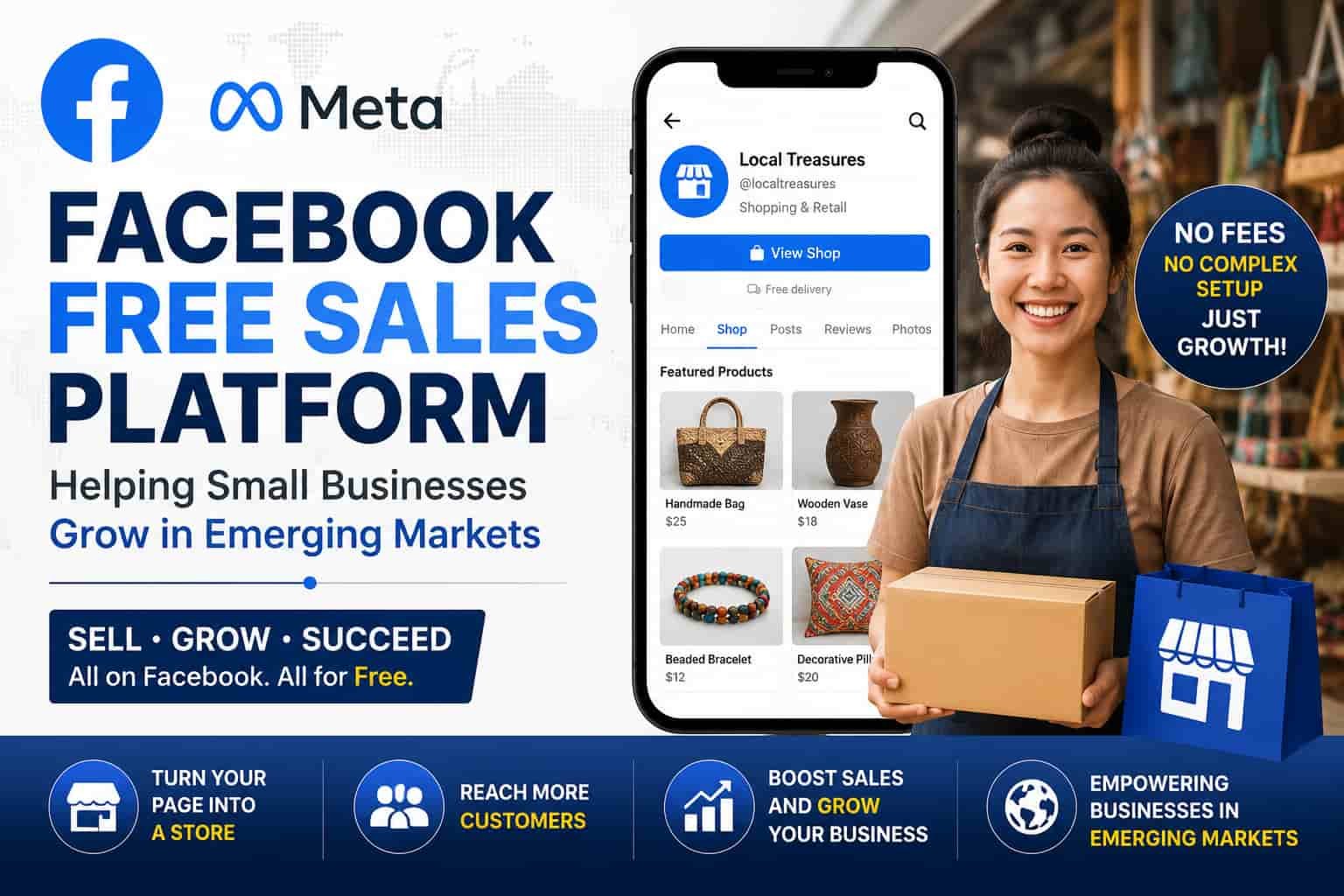
Meta (formerly Facebook) has introduced a free selling system for small businesses in emerging markets, allowing them to turn their Facebook Pages into simple online storefronts without paying fees. The main focus is regions like Southeast Asia, where digital commerce is growing quickly but traditional online selling tools can still be expensive or complex for small sellers.
This initiative helps businesses display products directly to customers, communicate through their Pages, and complete sales without needing a separate website. The long-term idea is not just to support small sellers, but also to help them grow into larger advertisers within Meta’s ecosystem.
It fits into Meta’s broader strategy of expanding digital access and commerce in developing regions, similar to earlier projects like Free Basics. Over time, this approach evolved into more advanced tools such as Facebook Shops and Instagram shopping features, which now integrate with platforms like Shopify to create smoother, mobile-first shopping experiences.
A Story From the Ground: How a Small Business Finds Its Way Online
I still remember reading about a small handmade craft seller in Southeast Asia who had one simple dream — to sell her products beyond her local market.
She didn’t have a website. She didn’t know coding. And hiring an e-commerce developer was far beyond her budget.
But she did have something powerful: a Facebook Page.
At first, it was just a place to post pictures. Friends would like them. A few comments would come in. Nothing serious.
Then Facebook introduced something new — a free sales platform built directly into Pages.
That’s where everything changed.
Read More:
As small businesses expand through Facebook’s free marketplace and social commerce tools, one of the biggest operational challenges becomes product delivery and logistics. That’s why
Choosing a courier service
carefully is essential for ensuring fast shipping, customer satisfaction, and repeat sales.
Turning a Facebook Page Into a Shop
Instead of building a website, she started:
- Uploading product photos
- Adding descriptions
- Listing prices
- Responding directly to customers in Messenger
Her Facebook Page slowly transformed into a mini online store.
This was not just posting anymore — it was selling.
And the most important part? It was completely free.
Why Meta Focuses on Emerging Markets
Meta’s strategy is not random. It is very intentional.
Emerging markets like:
- Southeast Asia
- South Asia
- Latin America
- Parts of Africa
have millions of small businesses, but many lack:
- Websites
- Payment infrastructure
- Digital marketing experience
So instead of asking businesses to “come online,” Meta brought the store to where people already were — Facebook.
The Real Goal Behind the Free Platform
On the surface, it looks like generosity.
But strategically, it works like this:
1. Build business presence
Small businesses start selling directly on Facebook Pages.
2. Increase engagement
Customers stay inside the Facebook ecosystem instead of leaving.
3. Long-term monetization
Once businesses grow, they eventually spend on:
- Ads
- Promotions
- Targeted marketing tools
So the free platform becomes a growth pipeline for future advertisers.
The Evolution Into Facebook Shops
This early system later evolved into more advanced tools like:
- Facebook Shops
- Instagram Shopping
- Meta Commerce Manager
Now businesses can:
- Sync catalogs
- Run ads
- Sell across Facebook and Instagram together
- Integrate with platforms like Shopify
What started as a simple Page-based selling tool became a full social commerce ecosystem.
Why This Matters for Small Businesses
For small sellers, this shift is huge.
Instead of investing heavily in:
- websites
- developers
- marketplaces
They can:
- Start instantly
- Sell globally
- Use social media as their storefront
It reduces barriers and makes entrepreneurship more accessible.
Key SEO Keyword Groups (Integrated Naturally)
Social Commerce Keywords
- social commerce platform
- Facebook selling tools
- online selling on Facebook
- digital storefront Facebook
- Meta commerce system
Business Growth Keywords
- small business growth online
- emerging market e-commerce
- digital entrepreneurship tools
- free online selling platform
- low-cost business marketing
Platform Evolution Keywords
- Facebook Shops evolution
- Instagram shopping features
- Meta commerce tools
- social media marketplace
Frequently Asked Questions
1. What is Facebook’s free sales platform for businesses?
It is a system that allows small businesses to turn their Facebook Pages into simple online stores where they can list and sell products without paying setup fees.
2. Why did Facebook launch this feature in emerging markets?
Because many businesses in regions like Southeast Asia lack websites and e-commerce tools. Facebook provides an easy way for them to start selling online using existing social media usage.
3. Is it really free to sell on Facebook Pages?
Yes, the basic storefront setup on Facebook Pages does not require fees. However, businesses may choose to pay for ads or promotions later.
4. How does Facebook benefit from offering free sales tools?
It increases user engagement, keeps businesses inside the platform, and eventually encourages sellers to invest in paid advertising and marketing tools.
5. What is the difference between Facebook Shops and the free Page selling system?
The Page system is an earlier, simpler version. Facebook Shops is a more advanced feature that integrates catalogs, Instagram, and third-party platforms like Shopify.
6. Can small businesses really grow using Facebook alone?
Yes, many small businesses start with Facebook Pages and later expand using ads, Instagram integration, and external e-commerce tools.
7. Which regions benefit the most from this system?
Emerging markets such as Southeast Asia, South Asia, Latin America, and parts of Africa benefit the most due to lower entry barriers to online business.
Final Thoughts
What started as a simple idea — letting businesses sell through a Facebook Page — has now grown into a global social commerce ecosystem.
For many small sellers, especially in emerging markets, it’s more than just a feature. It’s a starting point for digital entrepreneurship, offering a path that didn’t exist before the rise of social platforms.
And while the system benefits Meta in the long run, it also gives millions of small businesses something equally powerful: a chance to start selling without limits.