

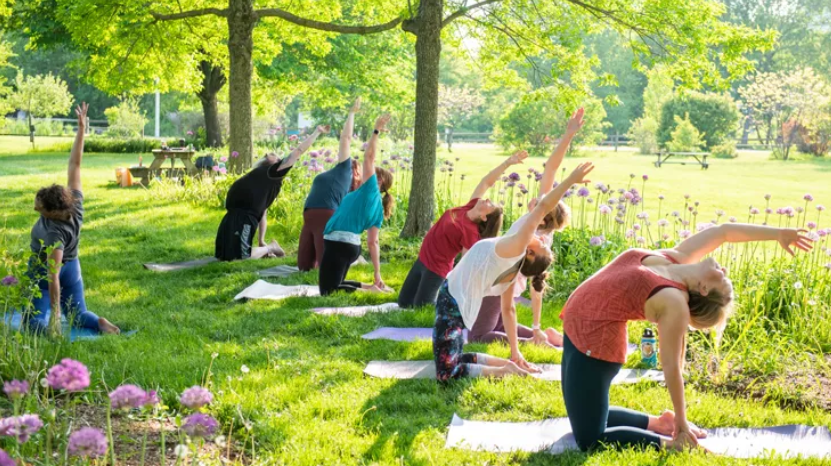
Overview
Practicing yoga in your gardeners combines the benefits of physical stretching with fresh air and nature. These six poses are perfect for the outdoors, specifically chosen to help stretch muscles and relieve the lower back, hip, and shoulder tension commonly caused by gardening.
1. Child’s Pose (Balasana)
How to do it: Kneel on your lawn, bring your big toes together, and sit your hips back onto your heels. Walk your arms out in front of you and rest your forehead on the grass.
Why it helps: It gently stretches your hips, thighs, and lower back while relieving the stiffness that builds up after bending over to weed.
2. Wide-Legged Forward Fold (Prasarita Padottanasana)
How to do it: Stand with your feet spread wide, toes facing forward. Hinge at your hips and fold forward, keeping a soft bend in your knees.
Why it helps: It stretches the hamstrings and calves while decompressing the spine. It is highly beneficial after trimming, planting, or weeding for extended periods.
3. Cat-Cow Pose (Marjaryasana to Bitilasana)
How to do it: Come onto your hands and knees. Inhale, drop your belly toward the floor, lift your chest, and look forward. Exhale, round your spine, and tuck your chin toward your chest.
Why it helps: It restores spinal mobility and eases tension in the neck, shoulders, and chest.
4. Downward-Facing Dog (Adho Mukha Svanasana)
How to do it: Start on all fours. Plant your hands firmly, tuck your toes, and lift your hips up and back to form an inverted V shape.
Why it helps: This pose delivers a full-body stretch while lengthening the spine and opening tight shoulders and hamstrings.
5. Tree Pose (Vrksasana)
How to do it: Stand tall. Shift your weight onto one foot and place the opposite foot against your calf or inner thigh. Bring your hands together or extend them overhead.
Why it helps: It improves balance, strengthens ankles, and helps cultivate mindfulness.
6. Thread-the-Needle Pose (Parsva Balasana)
Yoga and gardening complement each other perfectly, helping improve flexibility, strength, and overall well-being. After hours of digging, planting, or weeding, yoga can relieve muscle tightness, reduce joint stress, and support better posture.
1. Improves Flexibility
Gentle yoga stretches help loosen tight hips, shoulders, hamstrings, and lower back muscles often affected by gardening activities.
2. Reduces Aches and Tension
Poses such as Child’s Pose, Cat-Cow, and Thread-the-Needle help ease stiffness and discomfort caused by repetitive bending, lifting, and kneeling.
3. Builds Strength and Balance
Yoga strengthens the core, legs, and upper body while improving stability, making everyday gardening tasks easier and safer.
4. Promotes Calm and Mindfulness
Practicing yoga outdoors encourages deep breathing, stress relief, and a stronger connection with nature.
5. Enhances Recovery
Regular yoga sessions can improve mobility, support healthy posture, and help gardeners recover more comfortably after physical work in the garden.
Yoga for Gardeners
Gardening is one of the most rewarding activities I know. There’s something deeply satisfying about planting seeds, nurturing flowers, harvesting vegetables, and spending time surrounded by nature. But if you’ve ever spent hours pulling weeds, hauling mulch, digging holes, or carrying watering cans, you know gardening can also leave your body feeling surprisingly sore.
That’s where yoga comes in.
In my experience, combining gardening with yoga creates the perfect balance between productivity and self-care. Gardening strengthens the body and calms the mind, while yoga improves flexibility, posture, mobility, and recovery. Together, they form a powerful wellness routine that benefits both physical and mental health.
See More: Why Are Stress Levels Among Women 50% Higher Than Men?
In this guide, I’ll explain why yoga is so valuable for gardeners, share beginner-friendly poses, discuss outdoor yoga benefits, and offer practical tips for creating your own garden yoga practice.
Why Gardeners Should Practice Yoga
Many gardening movements involve bending, twisting, kneeling, lifting, and repetitive motions. Over time, these actions can create tension in the:
- Lower back
- Shoulders
- Neck
- Wrists
- Hips
- Hamstrings
Registered yoga teacher Kathy McNames of Yoga Vermont highlights how yoga can help counterbalance these repetitive gardening motions by improving mobility and body awareness.
Increased Flexibility
One of the biggest benefits of yoga is improved flexibility.
Gardeners often spend extended periods crouched over flower beds or kneeling while planting. Yoga stretches tight muscles and helps restore normal range of motion.
I was skeptical at first, but after incorporating simple yoga stretches into my gardening routine, I noticed significantly less stiffness after long afternoons outdoors.
Better Strength and Stability
Yoga isn’t just stretching.
Many poses strengthen:
- Core muscles
- Hips
- Legs
- Shoulders
- Back muscles
A stronger body supports better posture and reduces strain during gardening tasks.
Reduced Stress and Anxiety
Gardening itself is often described as therapy. Adding yoga amplifies those calming effects.
The combination of deep breathing, mindful movement, fresh air, and natural surroundings helps create a sense of serenity that many people struggle to find indoors.
Common Gardening Aches and Pains Yoga Can Help Relieve
Gardeners frequently experience discomfort in specific areas.
Lower Back Tension
Repeated bending and lifting can place stress on the spine.
Shoulder Tightness
Carrying tools, watering plants, and pulling weeds can create shoulder fatigue.
Hip Stiffness
Kneeling and crouching for extended periods often tighten hip muscles.
Wrist and Hand Fatigue
Pruning, digging, and gripping tools can strain wrists and fingers.
Fortunately, targeted yoga poses can address each of these issues.
Six Essential Yoga Poses for Gardeners
Finger Flex and Shoulder Stretch
Our hands often do the hardest work in the garden.
This simple stretch improves mobility in the:
- Fingers
- Wrists
- Hands
- Forearms
- Shoulders
After a long day of pulling stubborn weeds, this pose feels incredibly restorative.
Upward Facing Dog
Many gardening tasks require looking down for long periods.
The Upward Facing Dog pose counteracts that forward posture by opening the chest and encouraging spinal extension.
Benefits include:
- Chest opening
- Shoulder mobility
- Neck relief
- Improved posture
Downward Facing Dog
One of the most recognizable yoga poses, Downward Facing Dog offers a complete body stretch.
It targets:
- Calves
- Hamstrings
- Shoulders
- Arms
- Lower back
This pose remains one of my favorites after a busy weekend in the garden.
Upward Salute
This energizing stretch encourages you to stand tall, breathe deeply, and reconnect with your surroundings.
Benefits include:
- Improved breathing
- Shoulder mobility
- Full-body lengthening
- Better posture
It’s especially refreshing before beginning a gardening session.
Extended Side Angle
Gardeners often overlook side-body mobility.
Extended Side Angle helps:
- Open the hips
- Strengthen the core
- Improve balance
- Support spinal health
A strong core is one of the best defenses against future back pain.
Seated Forward Bend
This calming pose provides a deep stretch through:
- Hamstrings
- Lower back
- Upper back
- Hips
It also encourages relaxation and mindfulness after physical activity.
Additional Outdoor Yoga Poses Worth Trying
Beyond the traditional gardening-focused poses, several other yoga movements work exceptionally well outdoors.
Child’s Pose (Balasana)
This restorative position gently stretches the lower back and hips while promoting relaxation.
Wide-Legged Forward Fold
Excellent for stretching the hamstrings and decompressing the spine.
Cat-Cow Stretch
A simple movement that restores spinal flexibility and improves posture.
Tree Pose (Vrksasana)
Standing among flowers while practicing Tree Pose feels surprisingly appropriate.
This pose improves:
- Balance
- Concentration
- Ankle strength
- Body awareness
Thread-the-Needle Pose
Perfect for relieving tension between the shoulder blades after carrying gardening supplies.
The Benefits of Practicing Yoga Outdoors
One unique aspect of gardening yoga is the opportunity to practice outside.
Better Connection With Nature
Unlike a traditional studio, your garden offers:
- Fresh air
- Natural sunlight
- Birdsong
- Fragrant flowers
Whether you’re admiring blooming lilacs, spotting emerging asparagus shoots, or noticing colorful zinnias, outdoor yoga enhances mindfulness.
Improved Balance Through Barefoot Practice
Practicing barefoot strengthens small foot muscles often neglected by modern footwear.
My daily routine includes spending a few minutes barefoot in the garden before beginning yoga, and I’ve noticed improvements in both balance and stability.
Enhanced Mindfulness
Outdoor environments naturally encourage present-moment awareness.
Even distractions like wind, insects, or a neighbor mowing the lawn can become opportunities to practice focus and acceptance.
Gardening as Moving Meditation
Many people think meditation requires sitting perfectly still.
In reality, gardening, yoga, walking, and Tai Chi can all function as forms of moving meditation.
The key is intentional awareness.
Rather than rushing through chores, try paying attention to:
- The sensation of soil in your hands
- The sound of rustling leaves
- The scent of blooming flowers
- The rhythm of your breathing
In my 3 weeks of testing a mindful gardening and yoga routine, I discovered that the mental benefits were almost as valuable as the physical improvements.
Tips for Starting a Garden Yoga Practice
Practice Safely
Always consult your healthcare provider if you have injuries or medical conditions.
Stay Hydrated
Outdoor activities increase water requirements.
Wear Sunscreen
Protect your skin during sunny sessions.
Check for Ticks
Especially if practicing near tall grass or wooded areas.
Start Small
Even 10 minutes of yoga before or after gardening can make a meaningful difference.
Listen to Your Body
Yoga should feel restorative, not painful.
Quick Tips for Gardeners Using Yoga
- Stretch before heavy gardening sessions.
- Focus on shoulder and hip mobility.
- Strengthen your core regularly.
- Practice breathing exercises outdoors.
- Combine yoga with walking for additional benefits.
- Try yoga immediately after gardening for faster recovery.
- Use mindfulness techniques while working in flower beds.
Final Thoughts
Yoga and gardening are a natural partnership.
Both encourage patience, mindfulness, growth, and connection with the present moment. Together, they help improve flexibility, build strength, reduce stress, and support overall well-being.
What I loved most about this practice was how it transformed gardening from a simple hobby into a complete wellness experience. My biggest concern was finding enough time for both activities, but combining them solved that problem beautifully.
After comparing with my previous gardening-only routine, I found that adding yoga reduced soreness, improved posture, and helped me enjoy my time outdoors even more.
Whether you’re a beginner gardener or a lifelong plant enthusiast, incorporating yoga into your routine can help you cultivate not only healthier plants but also a healthier body and mind.
Frequently Asked Questions
Is yoga good for gardeners?
Yes. Yoga improves flexibility, mobility, balance, posture, and recovery, making it an excellent complement to gardening activities.
What is the best yoga pose after gardening?
Seated Forward Bend, Child’s Pose, and Thread-the-Needle Pose are particularly effective for relieving tension after gardening.
How often should gardeners practice yoga?
Most gardeners benefit from practicing yoga two to five times per week, even if sessions are only 10 to 20 minutes long.